How web scraping works
A scraper sends an HTTP request to a target URL, receives the page’s HTML (and often JavaScript-rendered content), then parses that markup to pull out specific fields such as prices, product names, or listings. The extracted values are typically saved to a spreadsheet, database, or delivered via an API.
Common use cases
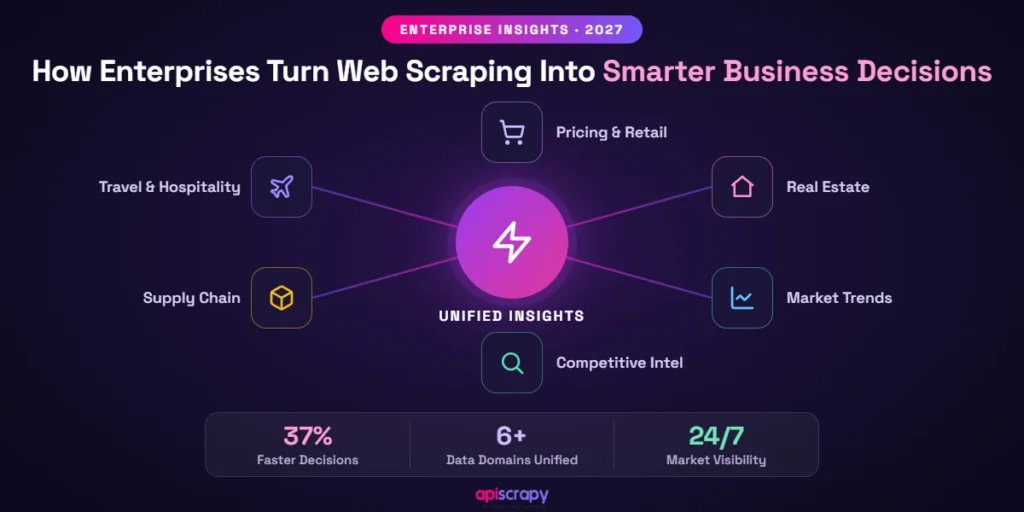
Businesses use web scraping for price monitoring, lead generation, market research, real estate listings aggregation, and building datasets for AI model training. Because manual copy-paste doesn’t scale, most production use cases rely on managed scraping infrastructure to handle proxies, rendering, and anti-bot defenses.